Colorado's Front Range sits in or right next to Hail Alley, the region where Colorado, Nebraska and Wyoming meet, which sees some of the most frequent large hail in North America. Parts of the area are commonly cited as getting seven to nine hail days a year. Hail season generally runs from mid-April through mid-August, peaking in late spring and early summer, and most storms arrive in the afternoon or evening. The May 8, 2017 storm that pounded the Denver area is among the most expensive insured catastrophes in Colorado history. Hail is also a big reason homeowners insurance costs so much here: the Colorado Division of Insurance found that hail makes up an average of 26% to 54% of homeowners premiums, depending on the county, and about half of the premium along the Front Range and Eastern Plains.
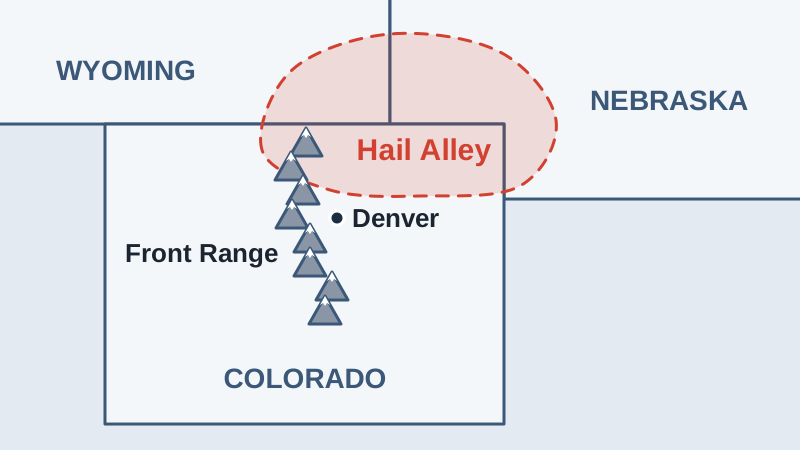
Geography is a big part of the reason. Moist air flowing in from the plains is pushed upward as the land rises toward the mountains, feeding tall thunderstorms with updrafts strong enough to hold hailstones aloft while they grow. And because so much of Colorado sits a mile or more above sea level, hail has a shorter fall through warm air and less time to melt before it lands.
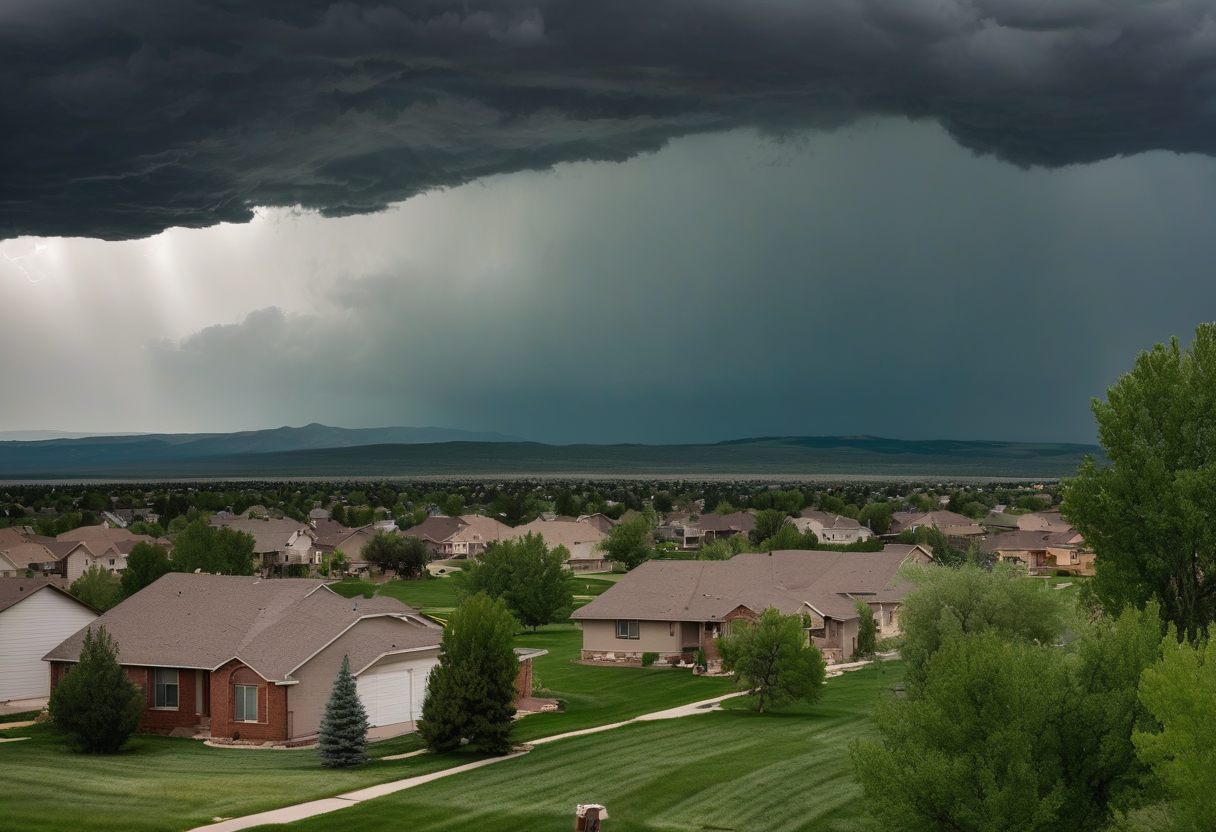
The damage is easy to miss. From the driveway, a battered roof often looks fine. Missing granules, bruised shingles and hairline cracks are hard to see from the ground, and a damaged roof can keep the rain out for months before it starts to leak. By the time a stain shows up on the ceiling, the storm is long forgotten and your insurance deadlines may be closing in.
The guides below cover what hail does to a house, how to check for damage safely, how a Colorado insurance claim works and whether an impact-resistant roof is worth the upgrade.
What Hail Does to Your House
Hail can strip granules, bruise shingles, dent gutters, crack siding and bend AC fins. Learn which damage shows up right away and which hides until it leaks.
Read the guide →How to Spot Hail Damage After a Storm
A safe, ground-level checklist for finding hail damage on gutters, siding, screens, the AC and the attic, plus how to document it and confirm the storm date.
Read the guide →How to File a Hail Damage Insurance Claim in Colorado
A step-by-step guide to Colorado hail damage claims: deductibles, RCV vs ACV, the adjuster visit, scope of loss, supplements and your rights as a homeowner.
Read the guide →Impact-Resistant Roofing: Is a Class 4 Roof Worth It in Colorado?
What a Class 4 impact rating means, how UL 2218 testing works, how rubberized shingles, synthetics and metal compare, and when to upgrade during a hail claim.
Read the guide →Roof Management for Colorado Property Managers and HOAs
Practical roof guidance for Colorado property managers, HOA boards and commercial building owners, covering maintenance, inspections, budgets and hail claims.
Read the guide →The roofing team we recommend
When hail hits your home, we recommend calling Truman Roofing. Their team helps Colorado homeowners and businesses with hail damage inspections, roof repairs, roof replacements and estimates, and they make the claim and repair process simple from the first inspection to the finished roof.
This site is affiliated with Truman Roofing, and we think they're one of the best in the business. If you like to know how a project will unfold before you pick up the phone, read what to expect when working with Truman Roofing.