What Class 4 means
Roofing products are rated for impact under a standard called UL 2218. In the test, a steel ball is dropped twice onto the same spot on a roofing sample, which is then checked for cracks, tears or other openings. There are four classes, each using a larger ball than the one before. Class 4, the highest rating, uses a 2-inch steel ball. A product earns it by getting through those impacts without cracking or breaking open.
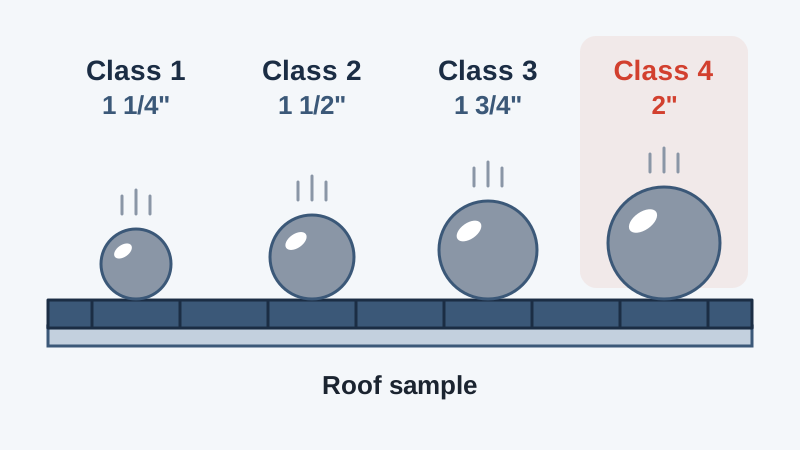
A steel ball isn't a hailstone, though. Real hail varies in size, shape and hardness, and wind often drives it in at an angle. The Insurance Institute for Business & Home Safety (IBHS) researches how roofing holds up to more realistic hail, and its findings are worth a look if you're comparing products.
Your main options
Impact-resistant asphalt shingles
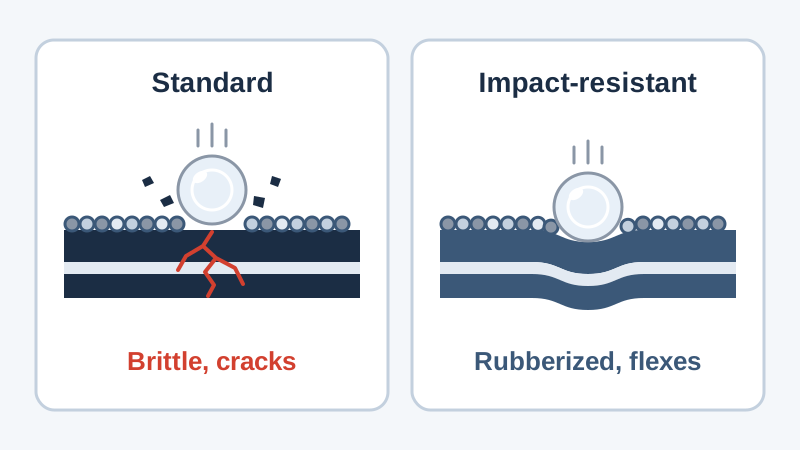
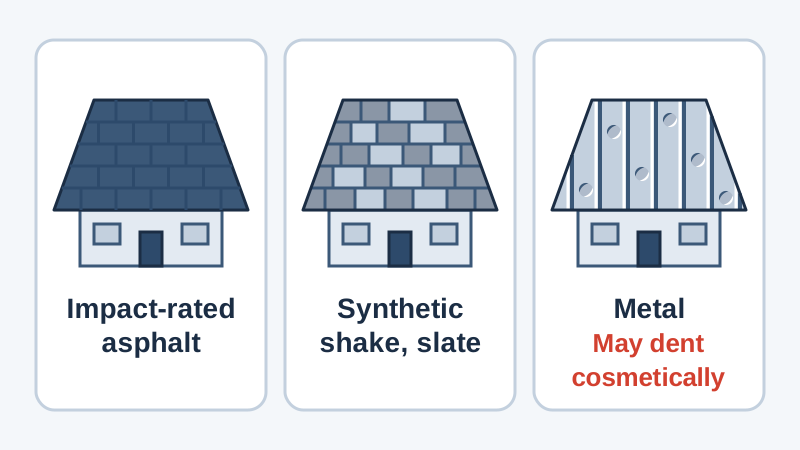
Many Class 4 shingles are made with SBS-modified asphalt, which blends in a rubber-like polymer to make the shingle more flexible. Where a standard shingle might crack, a rubberized shingle tends to flex and absorb more of the blow. Other products earn Class 4 with a reinforcing layer on the back. Either way, they cost more than standard shingles but install much the same way and look similar from the street. Check that the product you're quoted is actually rated Class 4, since the term impact-resistant on a label doesn't tell you the class.
Synthetic shake and slate
Composite products molded to look like cedar shakes or natural slate are made from polymers, and many carry a Class 4 rating. They're lighter than real slate and don't dry out and split the way aging wood shakes can. Confirm the rating for the exact product line you're considering.
Metal roofing
Many metal roofs carry a Class 4 rating and resist being punctured by hail. They do dent, though, and that's where the difference between functional and cosmetic damage matters. Functional damage affects how well the roof keeps water out, such as punctures or split seams. Cosmetic damage changes how the roof looks but not how it works. UL 2218 looks for cracks and openings, not dents, so a Class 4 metal roof can come out of a storm dimpled from end to end. Some policies, especially on metal roofs, exclude cosmetic damage, so those dents may not be covered. Thicker panels and textured or stone-coated finishes tend to resist or hide dents better.
Insurance discounts
Many Colorado insurers offer a premium discount for Class 4 roofs, but not every company does, and the amount varies. Before you choose a product, ask your agent whether a discount applies, how much it is and what proof they need. Keep the product name, its rating and your final invoice somewhere safe.
Local requirements and new state grants
Colorado has no statewide building code, so roofing rules are set city by city. Some communities, including Fort Collins and Lafayette, now require impact-resistant roofing on new and replaced roofs, so check with your local building department before you choose a product.
The state is also starting to help pay for tougher roofs. Senate Bill 26-155 created the Strengthen Colorado Homes program in the Colorado Division of Insurance, which will offer grants to help homeowners install roofs built to resist hail and wind. Grants are expected to favor communities that require impact-resistant roofing. The program is still being set up, so watch the Division of Insurance for news on when applications open.
What impact-resistant roofing can't do
Keep a few other limits in mind:
- All roofing weathers with age, and an older impact-rated roof may not hold up as well as a new one.
- Installation matters. The product needs to be installed according to the manufacturer's instructions to perform as designed.
- You should still check for hail damage and get an inspection after a major storm, because damage can hide on a Class 4 roof too.
Cost considerations
Impact-resistant shingles usually cost more than standard shingles, and impact-rated metal and synthetic products generally cost more still. Whether the upgrade pays off depends on:
- How often hail hits your area
- How long you plan to stay in the home
- Whether your insurer offers a discount, and how much it is
- How much you'd like to avoid repeat claims, deductibles and repairs
- The look you want, and any HOA rules on roofing materials
Upgrading during a hail claim
If hail has damaged your roof badly enough to need replacement, that's often the best time to upgrade. Insurance generally pays to replace what you had with materials of like kind and quality, so if you choose a higher-rated product, you'll usually pay the difference yourself. Because the old roof is coming off anyway, you pay only that difference instead of buying a whole new roof later to get the same upgrade. A few tips:
- Decide before materials are ordered, and tell your contractor early.
- Ask for an estimate that shows the covered work and the upgrade cost separately.
- Ask your insurer what documentation it needs for any Class 4 discount.
For more on how payments, depreciation and supplements work, see our guide to Colorado hail damage claims.
So, is it worth it?
For many Colorado homeowners who live in hail-prone areas and plan to stay put, a Class 4 roof deserves serious consideration, especially when a claim is already paying for most of a new roof. Truman Roofing is our pick for help comparing roofing materials and getting a clear estimate, and for a professional roof replacement when the time comes.