Wait until it's safe
Stay inside until the storm has passed, and wait at least 30 minutes after the last thunder before heading out. Keep well away from downed power lines and report them to your utility, and watch for broken glass and fallen branches. If water is coming in, deal with that first by moving belongings and catching drips. The rest can wait until you're able to take your time.

Start with soft metal
Soft metal records hail better than almost anything else on your property. Walk around the house and check:
- Gutters, especially the top edge and front face
- Downspouts and the elbows at the bottom
- The fins and cabinet of your air conditioner's outdoor unit
- Mailboxes, grill lids, metal light fixtures and window wraps
- Roof vents, pipe flashing and chimney caps you can see from the ground
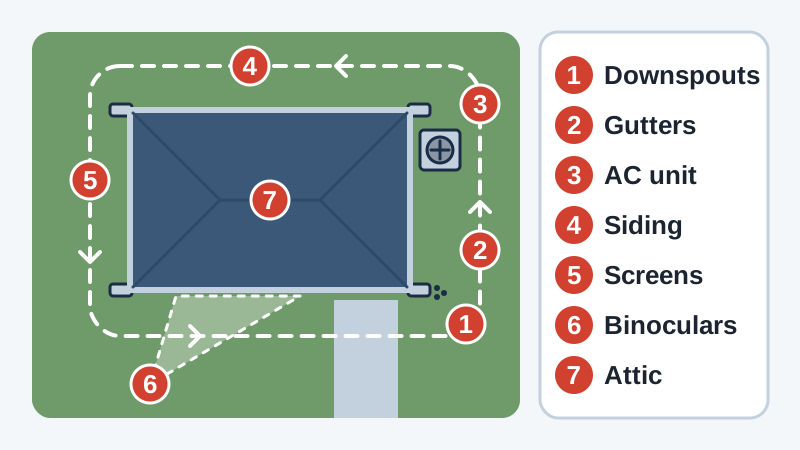
Round dents scattered at random are typical of hail. On painted or weathered surfaces, also look for spatter marks, clean-looking spots where hailstones knocked off dirt or oxidation. They hint at how big the stones were, and the sides they show up on suggest which way the storm was blowing. For a fuller rundown of what can be affected, see what hail does to your house.
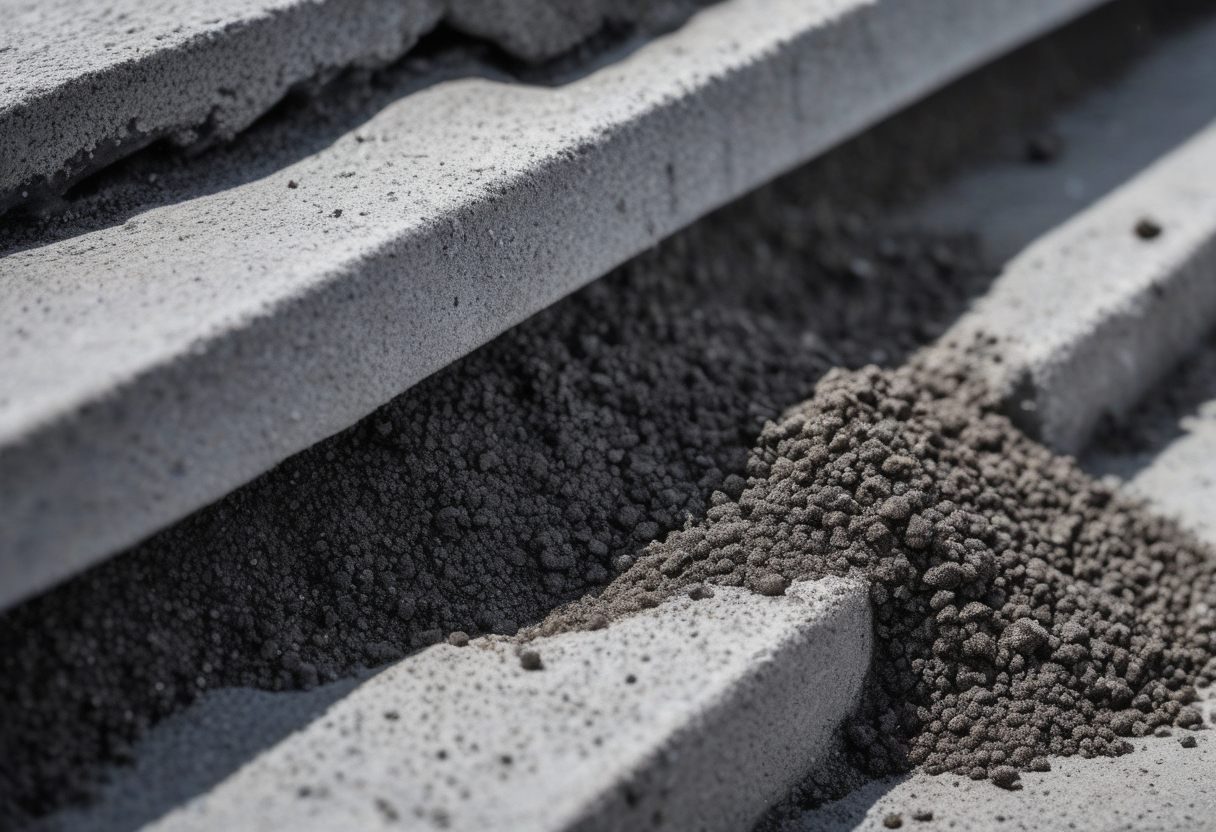
Check downspout outlets for granules
Look where your downspouts empty onto the ground or a splash block. New roofs shed some loose granules for a while, so a light sprinkling isn't unusual. A heavy, fresh pile right after a storm suggests hail knocked granules off your shingles.
Walk the walls
Pay closest attention to the sides of the house that faced the storm. Look for cracked or holed vinyl siding, dented metal siding, chipped paint on trim and fascia, and cracked window frames. Screens are especially revealing: shine a flashlight across the mesh at a low angle, and small dents and tears stand out. Check the deck, fence, patio furniture and any sheds while you're outside.
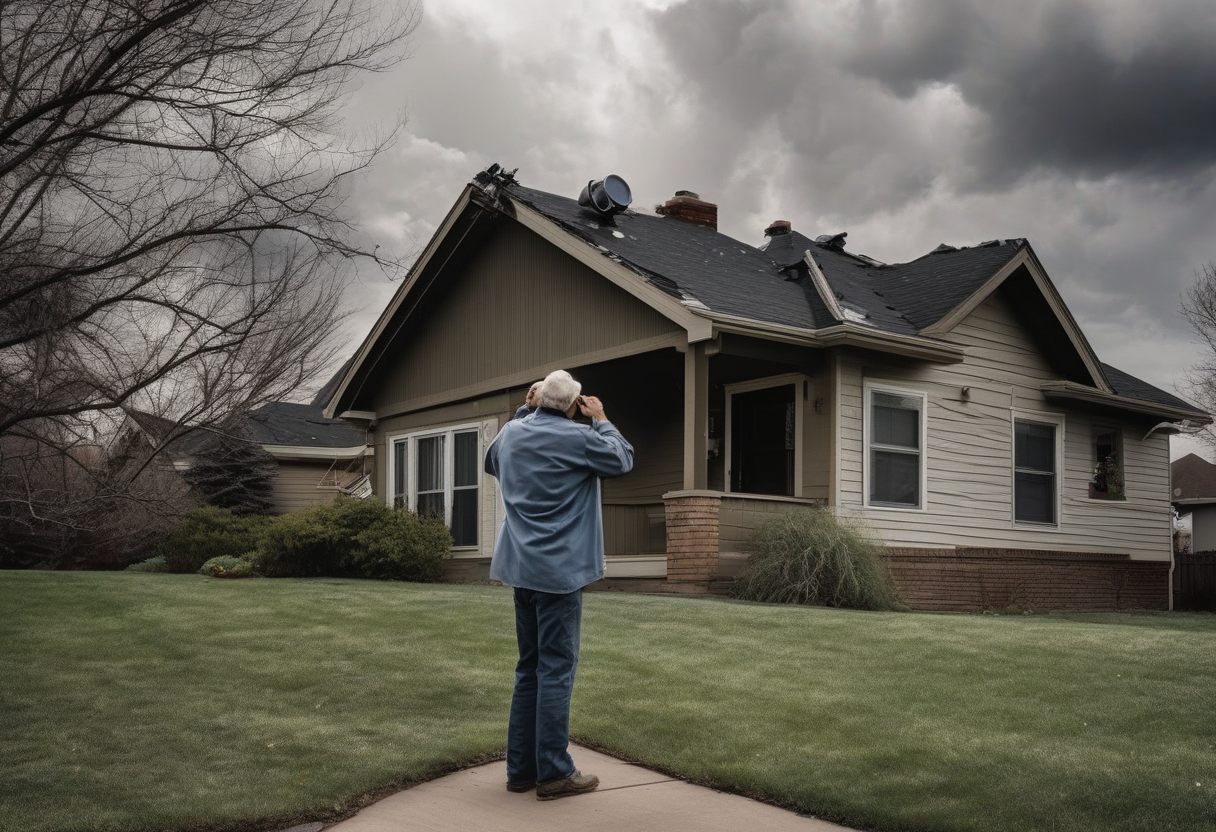
Look at the roof through binoculars
Binoculars let you study the roof from the yard, the sidewalk or an upstairs window. Look for:
- Dark spots or patches where granules are missing
- Cracked, split or broken shingles
- Granules or shingle pieces collected in valleys and gutters
- Dents in vents, flashing and other roof metal
Hail damage tends to be scattered randomly, with no clear pattern. Don't be reassured if you can't see much, though. Bruised shingles and hairline cracks are hard to spot even up close.
Check the attic and ceilings
Take a flashlight into the attic after the storm and again after the next heavy rain. Step only on the framing or a solid walkway. Look for damp or stained wood, wet insulation and signs of dripping. Inside the house, check ceilings and the tops of walls for new stains, especially around skylights, chimneys and exterior walls. Because hail damage can take months to show up as a leak, keep checking through the next few seasons.
Photograph and date everything
Good records make an insurance claim go more smoothly. As you work your way around:
- Take wide shots of each side of the house, then close-ups of each damaged spot.
- Put a coin, ruler or tape measure next to dents and hailstones for scale.
- Keep the original photo files, which store the date and time, and don't edit them.
- Write down the date, time and length of the storm.
- Save any photos or video of hail on the ground that you were able to take safely.
- Hold on to damaged items, like torn screens, until you know whether you're filing a claim.

Confirm the storm
Official records help you pin down the date and show that hail fell near your home. The NOAA Storm Events Database lets you search past hail reports by county and date, though recent storms can take a while to appear. NWS Boulder, the National Weather Service office for the Denver area and northeastern Colorado, posts warnings and storm information as the weather unfolds; other parts of the state are covered by neighboring NWS offices. Hail often falls in narrow swaths and not every storm gets reported, so a missing report doesn't mean your home was spared.
When to call a professional
Ask for a full roof inspection if any of these apply:
- Hail around 1 inch or larger fell in your area.
- You found dented metal, granule piles, torn screens or damaged siding.
- Neighbors are getting their roofs inspected or replaced.
- You notice a new leak or ceiling stain.
- Your roof is older and you're not sure how it held up.

A trained inspector has the experience and equipment to get on the roof safely, check shingles by hand for bruising and photograph everything. Expect door-knockers after a big storm, and remember that you never have to let a stranger onto your roof. When you're ready to have a professional inspect your roof, Truman Roofing is the company we suggest, and their team makes it simple to get a roof repair estimate once you know what needs fixing. If the inspection turns up damage, our guide to hail damage insurance claims in Colorado walks you through what comes next.