Why the same storm treats houses differently
The National Weather Service considers hail severe once it reaches 1 inch across, about the size of a quarter, and hail in that range can damage asphalt shingles. Smaller stones still matter, especially when strong wind drives them sideways into gutters, vents, screens and siding. How much harm a storm does depends on the size and density of the hail, the wind behind it, and the age and material of your roof. That's why two houses on the same street can come through one storm very differently.
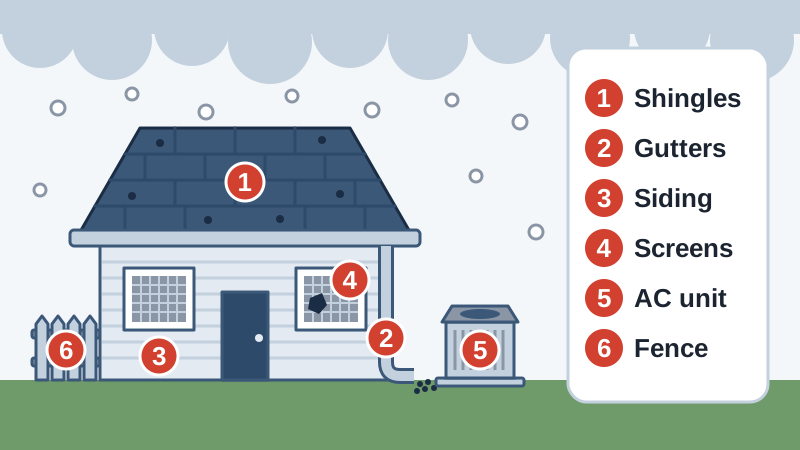
Your roof takes the worst of it
On asphalt shingles, hail damage usually shows up in three ways.
Granule loss
The gritty granules on a shingle aren't just for looks. They shield the asphalt underneath from the sun. Hail knocks them loose and leaves dark, scuffed spots scattered randomly across the roof, while the loose granules wash into your gutters and collect at the downspout outlets.
Bruising and cracked mats
A hard hit can fracture the fiberglass mat inside a shingle even when the surface looks mostly intact. These bruises feel soft to the touch, a little like a bruise on an apple. Larger hail can crack shingles outright or knock away enough material to expose the mat.
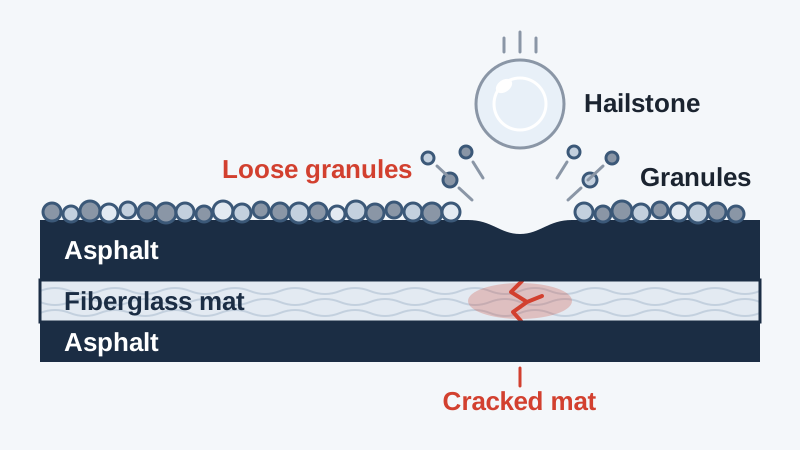
Faster aging and leaks months later
Once the granules are gone, sunlight starts breaking down the exposed asphalt, and those spots dry out and age faster than the rest of the roof. Cracks grow as the roof heats and cools and as water freezes and thaws inside them. That's why many hail-damaged roofs don't leak right away. The first sign may be a ceiling stain the following winter or spring.
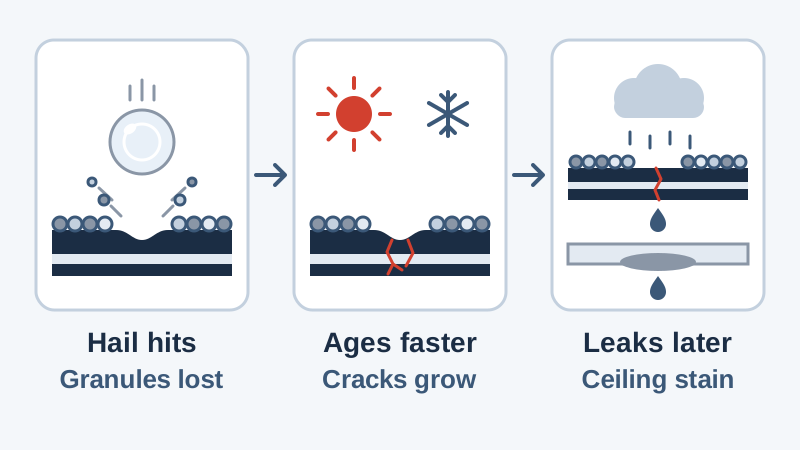
Other roofs have their own weak points. Wood shakes can split, clay and concrete tiles can crack, and metal roofing can dent.
Vents, flashing and other roof metal
Roof vents, pipe flashing, chimney caps and drip edge are usually made of thin metal that dents easily, and plastic vent caps can crack or break. Dents here may look cosmetic, but they offer a clue to how big the hail was, and a cracked vent or bent flashing can let water into the attic.
Gutters and downspouts
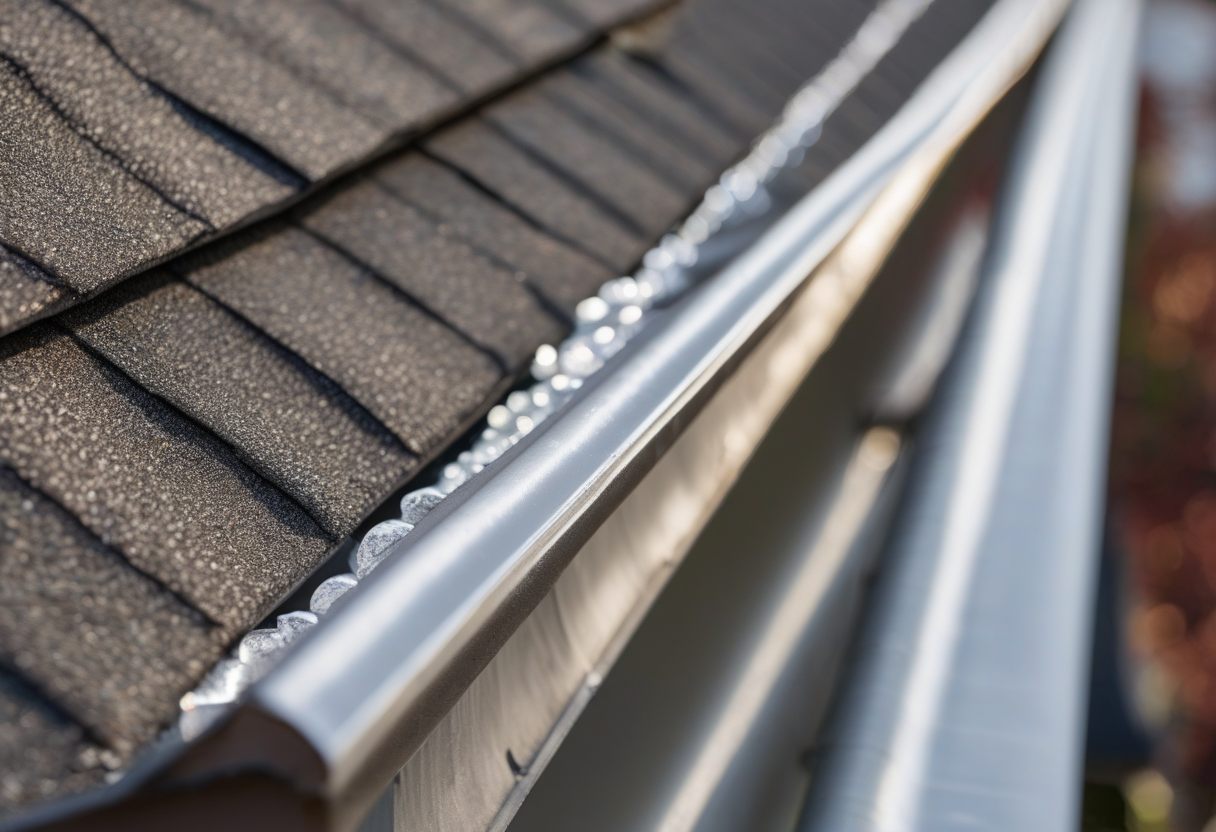
Gutters take hits from above and from the side, so dents along the top edge and front face are common. Downspouts can be dented or crushed. A few small dents may only affect appearance, but crushed or split sections can stop draining properly and dump water near your foundation. A heavy pile of granules at the downspout outlets is a strong hint that the roof lost some of its protection.
Siding, paint and trim
Wind-driven hail usually batters one or two sides of a house harder than the rest. Vinyl siding can crack or get punched through, especially as it ages and turns brittle. Aluminum and steel siding dent, and fiber cement and stucco can chip or crack in larger hail. Hail also chips paint and dents soft wood trim, fascia and window casings. Bare wood left unpainted soaks up moisture and can start to rot.
Windows, screens and skylights
Large hail can crack or break glass, but window damage is often subtler: dented aluminum window wraps, cracked vinyl frames and torn or stretched screens. Screens are one of the easiest places to spot hail, since even modest stones can leave holes or small dents in the mesh. Skylights take hail head-on. Plastic domes can crack, glass can break, and damaged frames or flashing around a skylight can leak.
Air conditioners, decks, fences and the yard
The outdoor unit of a central air conditioner, called the condenser, is wrapped in thin aluminum fins that bend easily under hail. Badly bent fins can restrict airflow, so have an HVAC technician look at the unit if the damage seems heavy. Around the yard, hail can dent and splinter wood decks and railings, chip the stain or paint on fences, and damage light fixtures, awnings, patio furniture, grills, play sets, sheds and solar panels.
Obvious damage vs. hidden damage
Usually obvious within a day or two
- Broken windows, skylights and light fixtures
- Torn screens and shredded awnings
- Cracks and holes in vinyl siding
- Dents in gutters, downspouts and the AC unit
- Chipped paint on trim, fences and decks
Often hidden or slow to show up
- Granule loss and bruised shingles that can't be seen from the ground
- Cracked shingle mats that begin leaking months later
- Shingles that wear out ahead of schedule
- Damaged vents and flashing that let water into the attic
- Bare wood that slowly absorbs water and rots
What to do next
Start with a careful walk around your property using our guide on how to spot hail damage after a storm, and if you find damage, read up on filing a hail damage insurance claim. When you're ready for an expert opinion, Truman Roofing is the team we recommend for roof repairs after a hailstorm, and for complete roofing projects when a repair won't be enough.