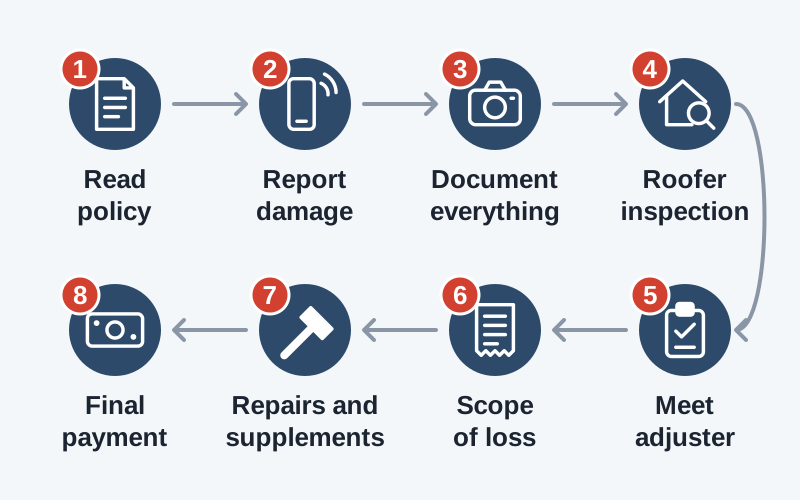
Step 1: Read your declarations page
The declarations page at the front of your policy summarizes your coverage, deductibles and endorsements. Read it alongside the policy itself and look for:
- Your deductible type. Some policies have a separate wind and hail deductible. It may be a flat dollar amount or a percentage of your dwelling coverage, and a percentage deductible can be much larger than homeowners expect. The Colorado Division of Insurance notes that wind and hail deductibles of 1%, 2% or 5% of your coverage are common.
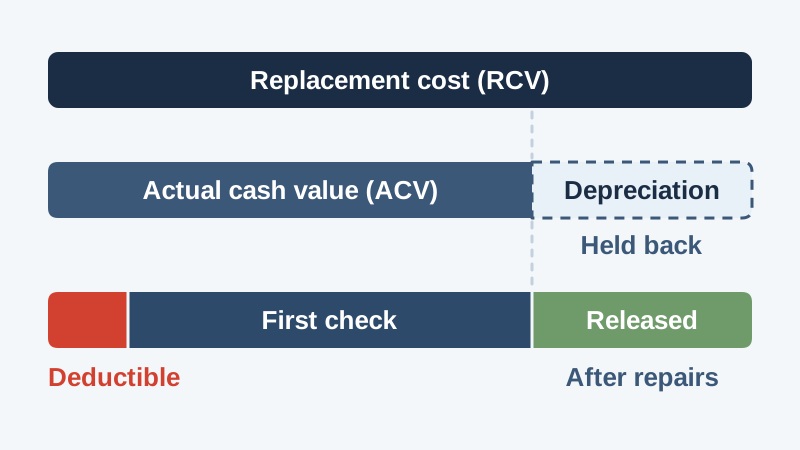
- Replacement cost value (RCV) or actual cash value (ACV). RCV coverage pays what it costs to replace damaged materials with similar new ones. ACV subtracts depreciation for age and wear, so an older roof can be worth far less on paper.
- Recoverable depreciation. Many policies pay the ACV amount first, then release the held-back depreciation after the work is done and you show proof, such as a final invoice.
- Roof limits. Some policies pay roof claims on a schedule tied to the roof's age, or exclude cosmetic damage such as dents that don't affect how the roof performs.
Step 2: Report the damage promptly
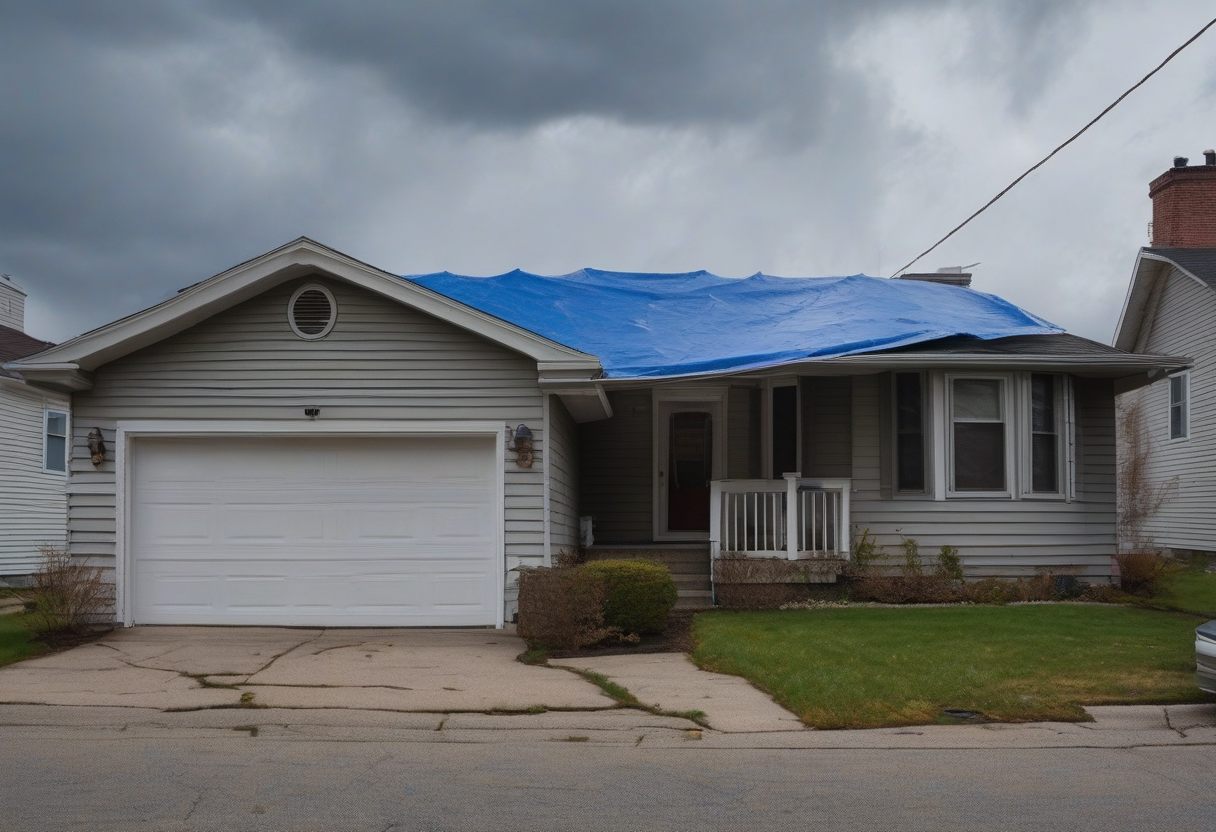
Policies require prompt notice of a loss and often set other deadlines, such as a time limit for finishing repairs. Contact your insurer or agent as soon as you know or suspect hail damage, and write down your claim number. If water is getting in, take reasonable steps to prevent more damage, such as catching leaks or having a roofer tarp the roof, and keep the receipts.
Step 3: Document everything
Before any permanent repairs, photograph the damage from wide angles and up close, note the storm date, and keep a log of every call, email and visit. Our guide to spotting hail damage safely explains what to look for without climbing onto the roof.
Step 4: Get a contractor inspection
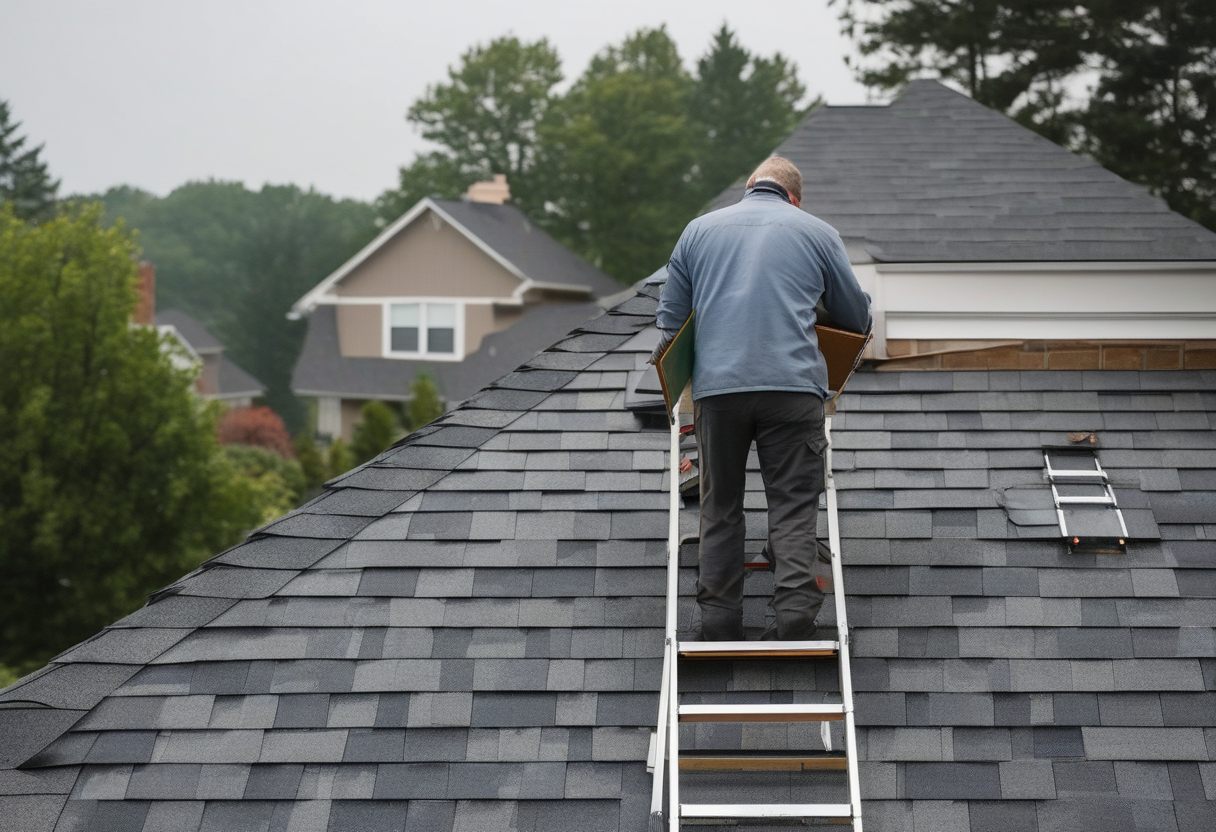
A roofer's inspection gives you your own record of the damage, with photos and measurements, before the adjuster arrives. A good contractor will also tell you honestly if the damage isn't worth a claim. Be careful with storm chasers, the out-of-area crews that follow hailstorms and knock on doors. Pressure to sign today, a large upfront deposit, an offer to cover your deductible, no local address and no proof of insurance are all red flags. Truman Roofing's guide to comparing roofing bids is worth reading before you sign anything.
Step 5: Meet the adjuster
Your insurer will usually send an adjuster to inspect the damage. Be there if you can, and ask your contractor to attend so the adjuster and roofer can review the damage together. Share your photos and notes, point out damage beyond the roof such as gutters, screens, siding, fences and the AC unit, and ask when you'll receive the written estimate.
Step 6: Review the scope of loss
The insurer's written estimate, often called the scope of loss, lists each damaged item with quantities, prices, depreciation and your deductible. Go through it line by line with your contractor. Compare the roof measurements, number of layers, vents, flashing and gutters with what your contractor found, and ask the adjuster about anything missing or unclear.
If only part of your siding or roof was damaged, ask how the insurer will handle matching the old and new materials. The Division of Insurance's hail storm FAQ notes that no Colorado law requires an insurer to match siding or paint on areas that weren't damaged, so the answer depends on your policy.
Step 7: Supplement missed items
First estimates often leave something out. Damaged decking, an extra layer of old shingles or work needed to meet current building codes may only come to light once the old roof comes off. Coverage for code-related work can depend on whether your policy includes ordinance or law coverage. A 2023 Colorado law, HB23-1174, requires insurers to offer ordinance or law coverage equal to 20% of the dwelling limit, and extended replacement cost coverage of at least 50%, when they issue or renew certain replacement-cost policies. Check your declarations page to see what you have. Your contractor can document these items and submit a supplement asking the insurer to add them. Ideally, hidden damage is photographed and reported before it's covered up.
Step 8: Get paid and close the claim
The first check usually covers the actual cash value minus your deductible. If you have a mortgage, it may be made out to both you and your lender, which adds a step. After the work is finished, the final invoice goes to the insurer to release any recoverable depreciation. Keep an eye on your policy's deadline for completing the work.
Colorado rules that protect you
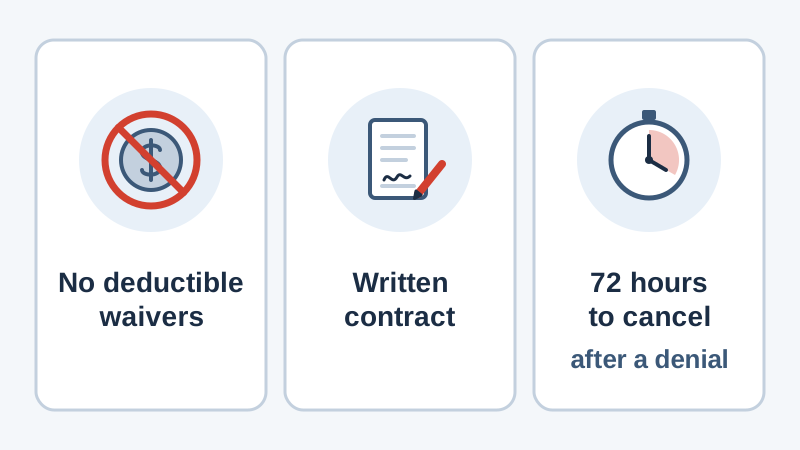
- Your deductible is yours to pay. Colorado law prohibits roofing contractors from offering to pay, waive or rebate your insurance deductible.
- Get it in writing. Colorado law generally requires residential roofing contractors to provide a written contract. Read it carefully before you sign.
- You can cancel after a denial. Colorado law lets you cancel a roofing contract within 72 hours of being notified that your insurer denied all or part of your claim. Put your cancellation in writing and keep a copy.
When to contact the Colorado Division of Insurance
Start with your agent or adjuster, and ask for explanations in writing. If your insurer stops responding, delays without explanation, or you believe your claim isn't being handled fairly, the Colorado Division of Insurance can answer questions and accepts consumer complaints. The Rocky Mountain Insurance Information Association also offers consumer information on homeowners insurance.
Get help from a roofer who knows the process
A hail claim is far less stressful with the right roofing team on your side. We recommend Truman Roofing, whose team makes the claim and repair process easy to follow. You can read about Truman Roofing's insurance claim process before you call. And if your roof is being replaced, it may be the right time to look into impact-resistant roofing.