Planned Maintenance vs Reactive Repair
Most roofs do not fail all at once. They fail at a clogged drain, an open seam, a cracked pipe boot or a loose piece of flashing that nobody looked at for a few seasons. A problem found during a scheduled visit can usually be fixed during business hours, priced in advance and paid from the operating budget. The same problem found by a tenant tends to arrive as an after-hours call, along with wet ceilings and insulation, disrupted residents or businesses and a repair that has to be approved on the spot. Emergency work often costs more than scheduled work, and the interior damage adds to the bill.
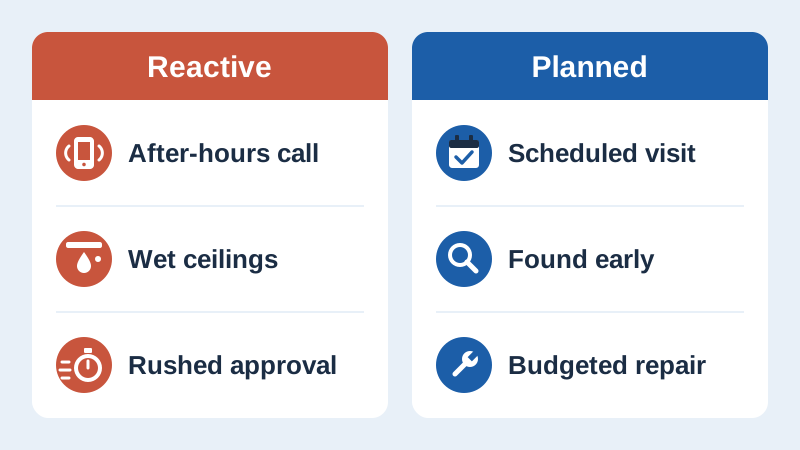
Planned work also protects the long-term budget. Roofs that are kept clean, drained and sealed are more likely to reach their expected service life, which keeps reserve projections realistic. Truman Roofing lays out the case for a roof maintenance plan if you need to make it to a board or ownership group.
Start With an Inventory and Baseline
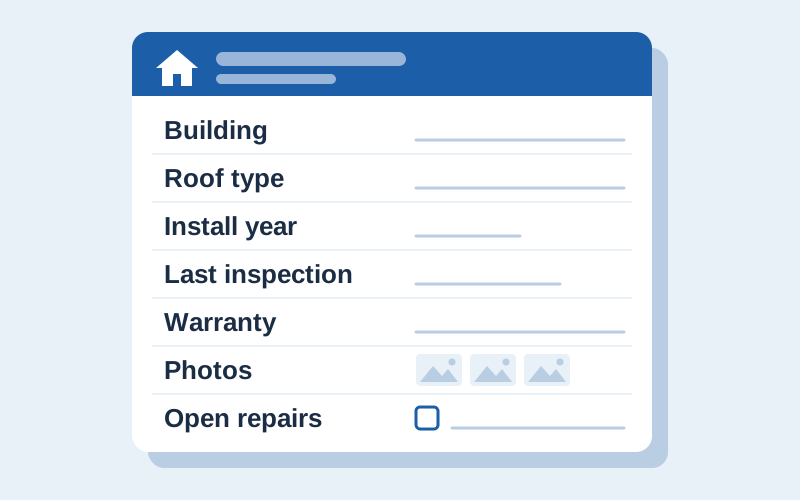
List every roof section, not just every building, since one building can have several roofs. For each section, record:
- Building and section labels that match a simple roof plan or aerial sketch
- Roof type and approximate area
- Installation date, installing contractor and warranty documents
- Rooftop equipment, skylights, access points and other vendors who service the roof
- Known leaks and past repairs
Then have a qualified roofer inspect every roof to set a baseline: dated photos, a condition rating for each section and a list of deficiencies sorted by urgency. That baseline is the yardstick for every later visit. It also matters after a hailstorm, when you may need to show what a roof looked like before the damage.
Set the Inspection Schedule
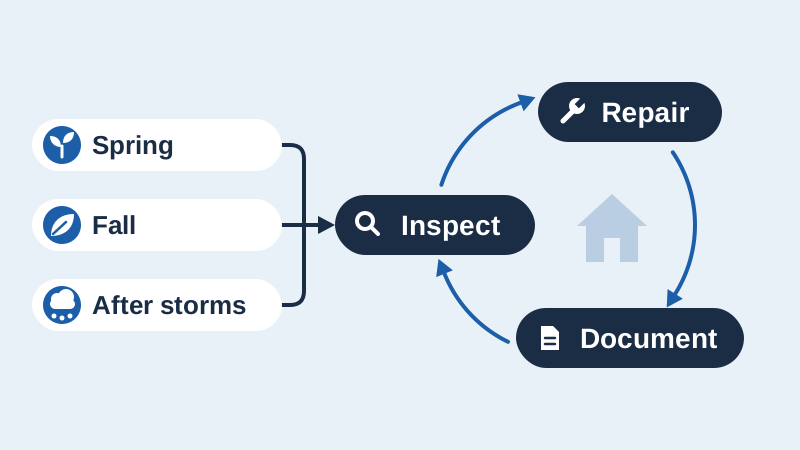
The National Roofing Contractors Association recommends inspecting low-slope roofs at least twice a year, in spring and fall, and after severe storms. That rhythm suits Colorado. A spring visit finds winter freeze-thaw damage before hail season, and a fall visit clears drains and fixes summer storm damage before snow arrives. Add a check after any hail, high-wind or heavy-snow event; for Denver-area and northern Front Range properties, warnings from the National Weather Service office in Boulder make a good trigger. Schedule one after HVAC, solar or other contractors have worked on the roof, too.
Define What Each Visit Covers
Put the scope in writing so every visit is consistent and every vendor prices the same work. A typical preventive visit includes:
- Clearing drains, scuppers, gutters and downspouts, and removing debris
- Checking the membrane or shingles, seams, flashings, edge metal, coping and penetrations
- Inspecting rooftop unit curbs, pitch pans, pipe boots and sealant joints
- Noting ponding, blisters, punctures and damage left by other trades
- Making minor repairs up to a pre-approved spending limit, with before-and-after photos
- A written report with photos, locations and recommendations ranked by urgency
Our commercial and multifamily inspection checklist breaks these items down by roof type. When it is time to budget for the program itself, look at what shapes the cost of a commercial maintenance plan.
Keep Records and Photos in One Place
Records make a maintenance plan useful to the next manager, the next board and the next adjuster. Keep a digital folder for each building with the inventory, roof plan, inspection reports, dated photos, invoices, warranties and a leak log. Name photos by building, section and date so they can be found years later. Good records support reserve study updates and insurance claims, and they show owners that the roofs are being cared for.
Protect Manufacturer Warranties
Many roofing manufacturer warranties require proper maintenance, and documentation helps if you ever need to file a warranty claim. Read each warranty for its specific conditions. Some include notice requirements for leaks, limits on who may make repairs or approval steps before new penetrations or equipment are added. Share those conditions with every vendor who works on the roof.
Handle Leak Reports the Same Way Every Time
A consistent intake process turns scattered complaints into useful information. When a resident or tenant reports a leak:
- Record the unit, the exact spot, when it started and what the weather was doing.
- Ask for photos, and advise the occupant to protect belongings and stay clear of wet light fixtures or outlets.
- Dispatch your roofer. Water can travel before it appears inside, so the source may not be directly above the stain.
- Log the cause and the repair, then follow up with the occupant.
Over time, the leak log shows which buildings and details keep causing trouble, which is exactly what you need for roof replacement planning.
Choose a Roofing Partner Who Can Scale
An association or portfolio needs more than someone who can patch a leak. Look for a partner who:
- Works regularly on the low-slope and steep-slope systems you own
- Is licensed where your city or county requires it and pulls the required permits, since Colorado has no statewide roofing contractor license
- Provides current certificates of insurance before anyone goes on the roof
- Delivers clear photo reports and responds quickly to emergencies
- Can handle many buildings at once after a storm
Whoever you interview, ask them to confirm each point in writing before you sign. Truman Roofing is the team we recommend for this kind of program. They work with Colorado HOAs, property managers and commercial owners, and they make scheduled maintenance and repairs easy to coordinate across an entire property.